According to the State of the Global Islamic Economy Report 2025/2026: 346 investment deals totaling US$13.1 billion were recorded in the Halal ecosystem in 2025. Global Muslim consumer spending reached US$2.60 trillion in 2024, projected to increase to US$3.56 trillion by 2029. The 57 OIC member countries are promoting cooperation to improve supply chain quality and standards.
Interestingly, these trends—AI, blockchain, traceability, circular economy, digital transformation—are also core elements of ESG.
What is ESG?
ESG is a set of criteria for assessing the sustainability of a business: Environmental – resource use, emission reduction; Social – treatment of employees, customers, and the community; Governance – transparent governance systems, risk control. Today, ESG is no longer just a “plus point” but is becoming a condition for choosing partners.
Are Halal and ESG really related?
Halal and ESG share many common values. Environmental: traceable raw materials, reduced waste, optimized supply chain. Social: food safety, consumer rights, integrity in trade. Governance: raw material control, record keeping, traceability, periodic assessments.
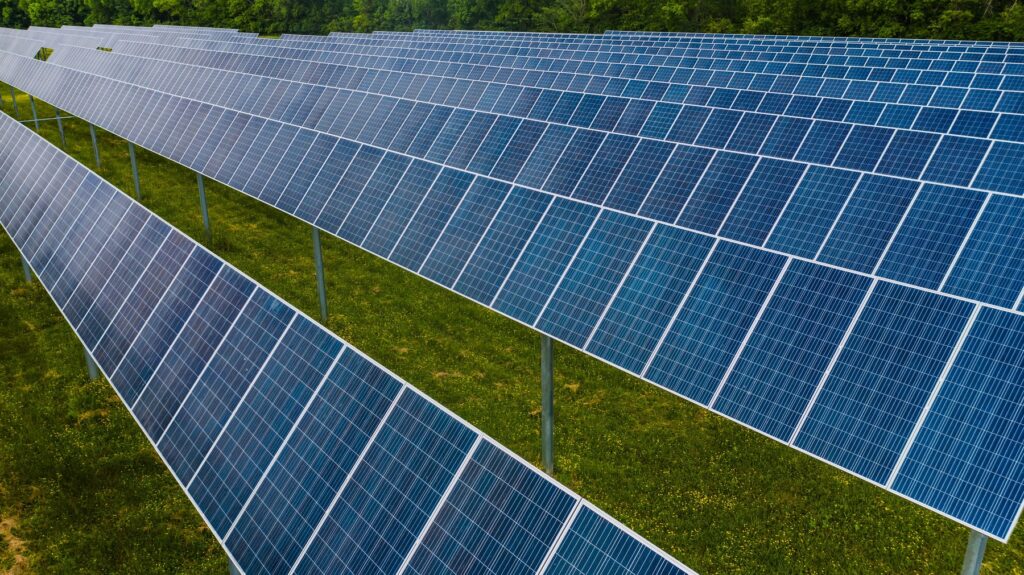 Photo: Modern solar power station
★ MOST IMPORTANT POINT
Achieving Halal certification does not automatically mean full compliance with ESG standards — but when implemented simultaneously, the two systems complement each other very strongly.
Consumers are changing.
Today’s consumers are not only concerned about “whether the product is good or not,” but also want to know where the product comes from, whether the process is transparent, and whether the business is responsible towards the environment and society. That’s why traceability, digital transformation, and data transparency are becoming the bridge between Halal and ESG.
Vietnam Insight
For Vietnamese businesses, Halal and ESG should not be viewed as two separate projects. If a business is standardizing its processes to achieve Halal certification, this is also the right time to standardize its governance system, build a traceability database, and prepare for ESG requirements from international partners.
 Photo: ESG report document
Global Vision
The competitiveness of the Halal industry in the coming period will be measured not only by market size, but also by the quality of the ecosystem. Leading countries will be those that know how to integrate Halal standards, digital transformation, innovation, and sustainable development into a unified strategy.
Vietnam Halal Tourism Conference 2026
This is one of the topics that will be shared and discussed at the Conference, which brings together regulatory bodies, associations, businesses, certification organizations, and international partners to discuss the future of the Halal industry.
REFERENCES
— State of the Global Islamic Economy Report 2025/2026, DinarStandard.
— Content analysis & editing: Halal Hub Vietnam.