When it comes to Halal, most businesses immediately think of ingredients, production processes, or Halal certification. However, few realize that Halal products not only need to be produced according to standards, but also need to be protected throughout their journey from the factory to the consumer.
In the modern Halal economy, logistics is not simply about transporting goods. It is part of a system that ensures the Halal integrity of products throughout the entire supply chain.
What is Halal Logistics?
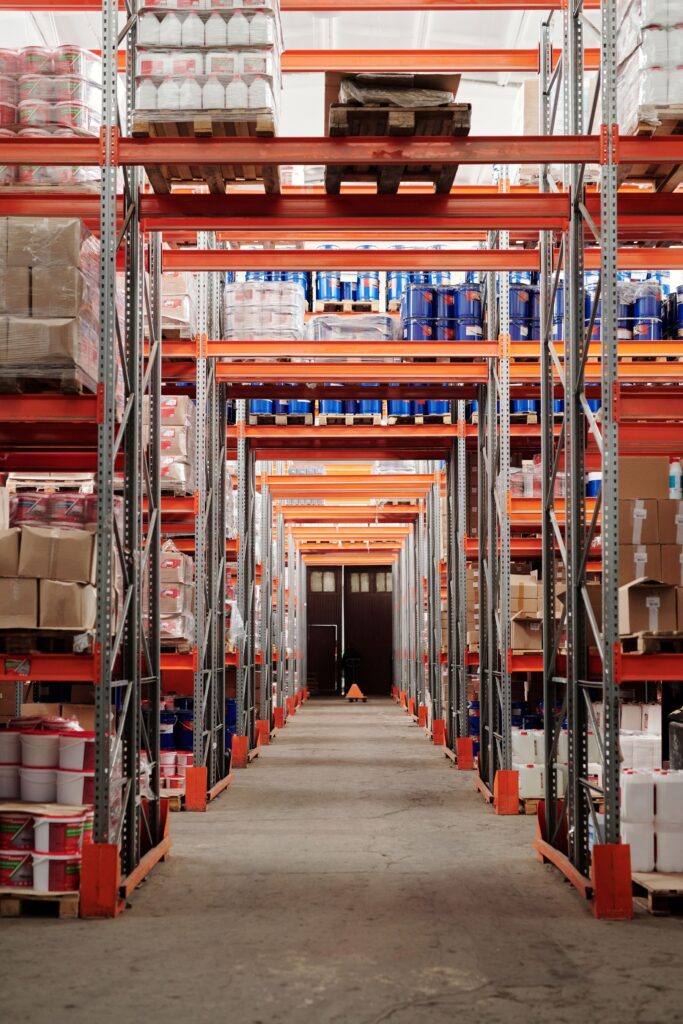
Halal logistics is a system for managing transportation, warehousing, handling, and distribution to ensure that Halal products are not mixed, cross-contaminated, or lose their Halal status throughout the entire distribution process. If the logistics chain is not properly managed, products may no longer meet the requirements of the target market, even if they have been produced according to Halal standards.
★ MOST IMPORTANT POINT
Halal isn’t just created in the factory. Halal must be maintained throughout the entire supply chain — that’s the concept of Halal Integrity.
Why is Halal Logistics becoming increasingly important?
The global Halal economy is projected to reach $2.6 trillion in 2024 and grow to $3.56 trillion by 2029. Alongside this growth, consumers not only want to know if a product is Halal certified, but also how it was transported, whether it was separated from non-Halal goods, and whether its entire journey is traceable.
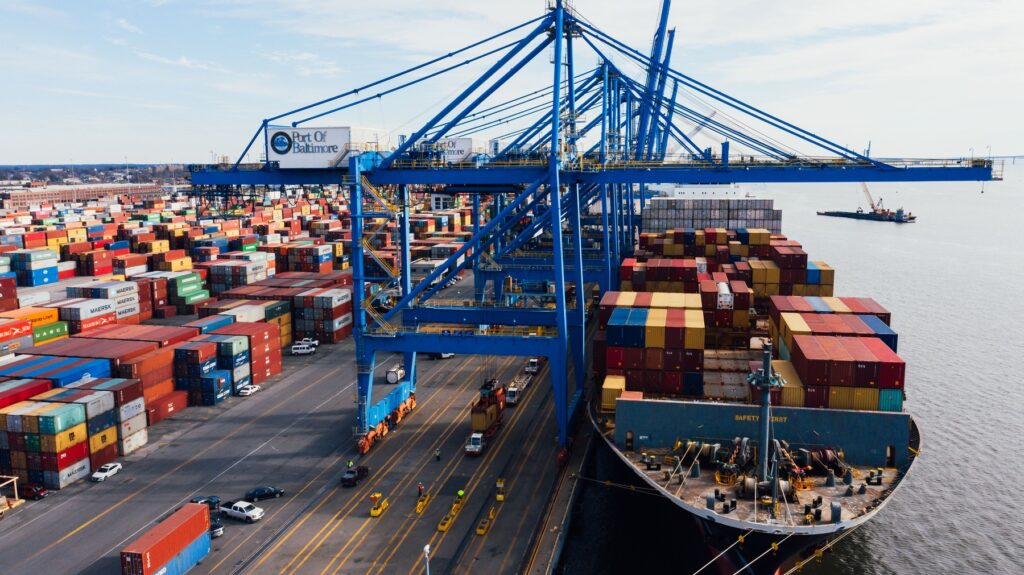 Photo: International container port — global logistics infrastructure
From “transportation” to “protecting Halal integrity”
If a batch of Halal food is stored or transported alongside non-compliant goods without the required separation measures, the business may have to reassess the conformity of the entire batch. Therefore, many international businesses have developed specialized logistics processes for Halal products to minimize risks.
Technology is changing Halal Logistics.
Technologies such as artificial intelligence (AI), blockchain, the Internet of Things (IoT), QR code-based traceability systems, and smart inventory management are being applied to help businesses track product journeys in real time, control risks, and increase transparency.
★ REMEMBER
In the future, consumers may simply scan a QR code to find out where a product is manufactured, stored, shipped, and certified Halal.
New opportunities for Vietnam’s logistics industry.
With its increasingly developed international seaport system, road and air networks, and strategic location in the heart of ASEAN, Vietnam effectively connects with major Halal markets such as Malaysia, Indonesia, Brunei, Singapore, and the Middle East. Vietnam can not only export Halal products but also provide specialized logistics services for the regional supply chain.
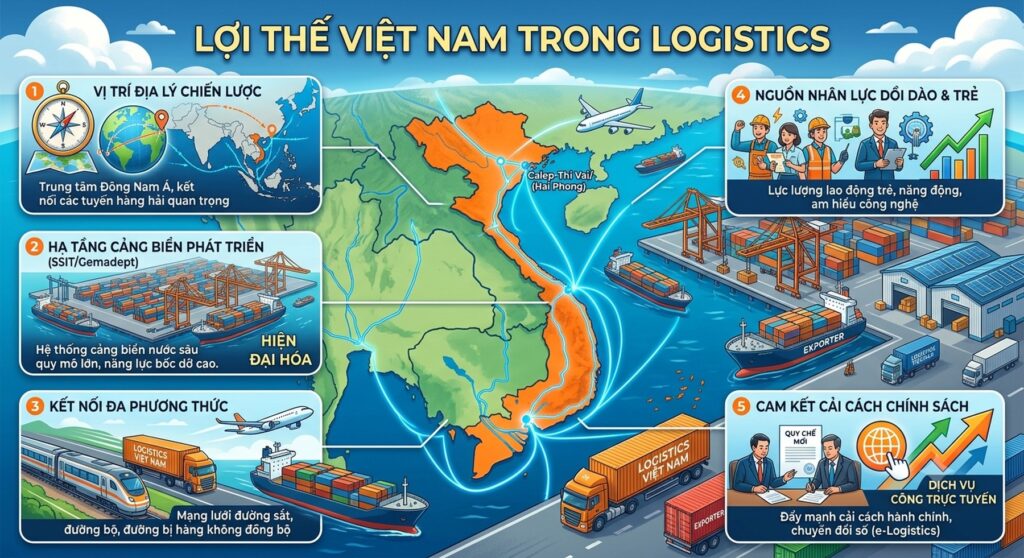 Infographic: 5 Advantages of Vietnam in Halal Logistics
Khanh Hoa — Potential to become the Halal logistics hub of Central Vietnam
With Cam Ranh International Port, the Van Phong Bay seaport system, Cam Ranh International Airport, and a transportation network connecting the South Central and Central Highlands regions, Khanh Hoa has favorable conditions to develop logistics services for international trade, combining its strengths in fisheries, agricultural products, and tourism.
Vietnam Halal Tourism Conference 2026 — Connecting to perfect the ecosystem
To develop the Halal industry, it’s not enough to focus solely on production or tourism. It’s essential to build a synchronized ecosystem where logistics plays a crucial connecting role between businesses, markets, and consumers.
In the Halal economy, product quality creates value, but it is logistics that helps preserve that value throughout its journey to the global market.
REFERENCES
— State of the Global Islamic Economy Report 2025/2026, DinarStandard.
— Content analysis & editing: Halal Hub Vietnam.