In common understanding, Halal is often reduced to a label on food packaging. This narrow view is causing many Vietnamese businesses to miss out on one of the world’s fastest-growing value chains. Below are the perspectives that Islamic-economy analysts—and DinarStandard, publisher of the industry’s most authoritative State of the Global Islamic Economy report—believe businesses must understand to avoid falling behind in this market.
1. Halal Is a Compliance Framework, Not a Stand-Alone Certificate
At its core, Halal operates much like standards such as HACCP or ISO 22000: it governs the entire product life cycle, from raw-material sourcing and production processes to logistics and distribution. This explains why Halal has expanded into pharmaceuticals, cosmetics, finance, and hospitality—virtually any industry with a supply chain can be made Halal-compliant.
2. The Market Is Already Larger Than Many G20 National Economies
According to DinarStandard’s SGIE 2025/26 report, consumer spending across the Islamic economy reached USD 2.6 trillion in 2024 and is projected to rise to USD 3.56 trillion by 2029—representing a compound annual growth rate (CAGR) of about 6.5%, significantly above average global GDP growth.

The global Islamic economy is expanding across every continent, not only the Middle East.
3. Demographics Are a Long-Term Growth Engine, Not a Passing Phenomenon
The global Muslim population has surpassed 2 billion, accounting for more than one quarter of the world’s population, while over 540 million people will enter their prime consumption years before 2030. This demographic foundation is why international investment funds view Halal as a structural market rather than a short-term trend.
4. Halal Is Shifting from a “Religious Factor” to a “Quality Signal”
The SGIE report notes that a significant segment of non-Muslim consumers actively chooses Halal products because they associate them with stringent hygiene controls and transparent traceability. This allows brands to position Halal as a broader competitive advantage rather than confining it to a niche market segment.

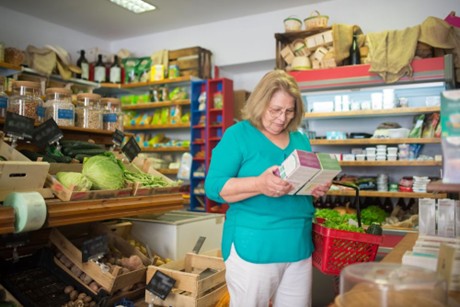
Muslim and non-Muslim consumers shop side by side—Halal is increasingly associated with trust in quality.
5. Islamic Finance—Not Food—Is the Largest Component
Islamic financial assets reached USD 5.99 trillion in 2024 and are forecast to grow to USD 9.72 trillion by 2029—nearly four times the size of the Halal food sector (USD 1.53 trillion). Vietnamese businesses have barely tapped this area, even as opportunities to access capital from Islamic funds—through sukuk and Sharia-compliant investment funds—continue to expand.
6. Malaysia, Not the Gulf States, Is the Global Benchmark
Malaysia has topped the Global Islamic Economy Indicator (GIEI) for many consecutive years, supported by the JAKIM standards system, one of the most widely recognized in the world. This is why many exporters, including those from non-Muslim countries, seek Malaysian Halal certification as a “passport” to multiple markets instead of obtaining separate certification for each country.
7. Seafood’s “Halal by Default” Principle Does Not Eliminate Cross-Contamination Risks
Fresh seafood is generally considered Halal by default, but highly processed products—such as canned tuna, fish cakes, and surimi—must still demonstrate the Halal origin of additives, cooking oils, and preservatives. This is a key technical bottleneck that prevents many Vietnamese seafood processors, despite having compliant raw-material zones, from exporting directly to Muslim markets with strict certification requirements.
8. Muslim-Friendly Travel Is the Fastest-Growing Segment in the Entire Industry
From USD 249 billion in 2024, the Muslim-Friendly Travel segment is projected to reach USD 424 billion by 2029—far outpacing growth in the food sector. This provides a direct economic rationale for Vietnam’s ambition to become a “new destination for Halal tourism.”
9. Vietnam Has Completed Its Legal Framework, but Certification Capacity Remains a Bottleneck
Decree No. 127/2026/ND-CP (effective June 1, 2026) establishes, for the first time, a comprehensive Halal quality-management framework. However, to turn this framework into a real competitive advantage, businesses still need a domestic certification system that is bilaterally recognized by importing markets—a task the Decree assigns to the Ministry of Science and Technology to lead through negotiations.
10. Indonesia Is Setting a “Hard Deadline” That Will Reshape the Competitive Landscape
From October 17, 2026, Indonesia—the world’s largest Muslim market—will require Halal certification for most goods in circulation. For exporting countries, this creates a clear dividing line between businesses that prepared early and those that may lose access overnight to a market of 280 million people.
Conclusion
These ten points are not merely interesting statistics for discussion—they map an economic shift that most Vietnamese businesses are still watching from the sidelines. Ultimately, Halal is not a technical barrier to overcome, but a bridge: one that can carry Vietnamese agricultural products, seafood, and services to more than 2 billion consumers worldwide, while bringing capital, travelers, and knowledge from the Islamic world to Vietnam. The question is no longer “Is Halal worth investing in?” but “Will Vietnamese businesses cross this bridge as leaders—or as latecomers after the rules of the game have already been set?”
Sources: DinarStandard — State of the Global Islamic Economy 2025/26; Salaam Gateway; Vietnam Government Portal.