For many years, when “Halal” was mentioned, many people still thought of it simply as a religious regulation exclusive to Muslims or only related to food processing. However, in reality, Halal has evolved far beyond that traditional concept to become a global economic ecosystem worth trillions of US dollars and with impressive growth rates.
For Vietnamese businesses, a proper understanding of Halal not only expands their knowledge but also opens the door to one of the world’s most promising markets.
What does Halal mean?
“Halal” is an Arabic word meaning “permitted” or “lawful” according to Islamic law (Sharia). The opposite of Halal is Haram—that is, things that are forbidden.
For food, Halal regulations not only cover ingredients but also the entire process:
- Source of ingredients
- Production, processing, and preservation procedures
- Packaging, shipping, and distribution
All products must be free from cross-contamination with prohibited ingredients and adhere to strict standards of hygiene, safety, and transparency. Therefore, Halal is now seen as a comprehensive quality management system rather than just a religious requirement.
★ MOST IMPORTANT POINT
Halal = “permissible” according to Shariah — a comprehensive quality management system, not just a mere religious regulation.
Halal is more than just food.
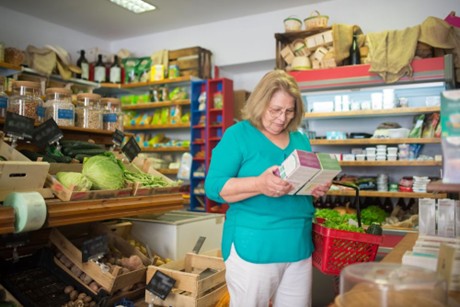
This is one of the most common misconceptions. Today, the Halal economy encompasses many sectors: food and beverages, Muslim-friendly tourism, hospitality, cosmetics, pharmaceuticals, Islamic fashion, logistics, e-commerce, and Islamic finance — a complete economic ecosystem where multiple industries collaborate to create value.
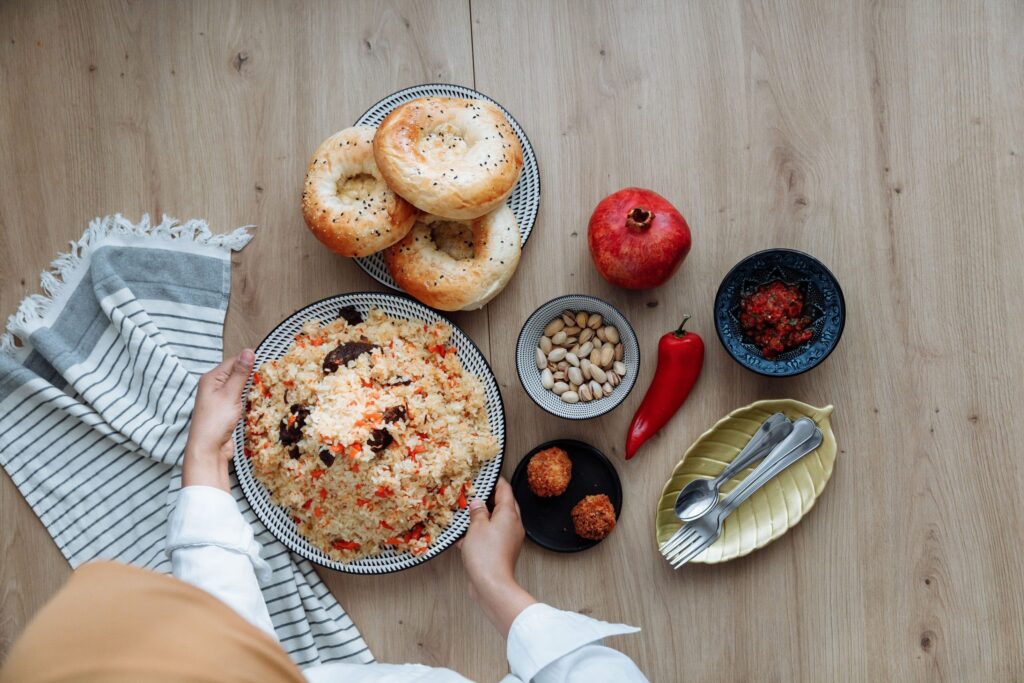
Photo: A diverse Halal food platter.
A market worth trillions of dollars.
According to the State of the Global Islamic Economy Report 2025/2026, total spending by Muslim consumers in the Halal economy reached approximately $2.6 trillion in 2024 and is projected to increase to $3.56 trillion by 2029.
The Halal food industry alone reached approximately $1.53 trillion in 2024, continuing to be the largest sector of the Halal economy. In particular, the Muslim-Friendly Travel sector reached approximately $249 billion and is projected to increase to $424 billion by 2029.
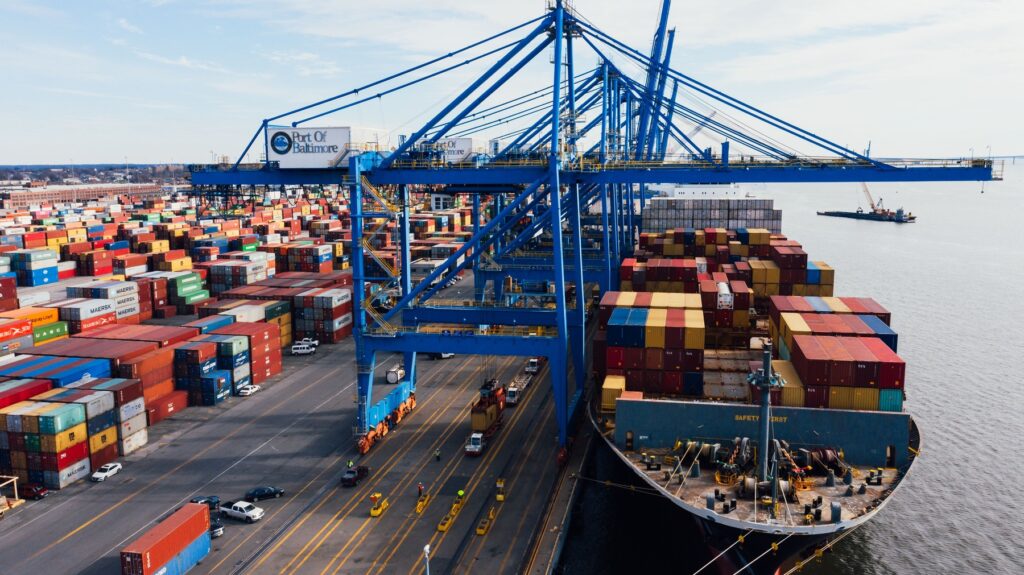 Photo: International container port — illustrating the scale of global trade.
★ REMEMBER
$2.6 trillion (2024) → $3.56 trillion (2029). This is no longer a niche market, but a significant part of global trade and investment.
Is Halal only for Muslims?
The answer is no. Although Halal standards are based on Islamic law, an increasing number of non-Muslim consumers are also choosing Halal products and services—thanks to their values of food safety, transparency in production, traceability, business ethics, animal welfare, and sustainability.
Why should Vietnamese businesses care?
Vietnam has many advantages to participate more deeply in the global Halal value chain: a developed agricultural sector, a fisheries industry that is among the world’s leading exporters, an increasingly modern food processing industry, a developed port and logistics system, and a network of free trade agreements (FTAs) with many countries.
Meanwhile, member states of the Organization of Islamic Cooperation (OIC) import hundreds of billions of dollars worth of food, agricultural products, consumer goods, and services from around the world each year — creating enormous opportunities for Vietnamese businesses if they can meet Halal standards and build trust with international partners.
Halal is an opportunity, not just a certification.
Halal certification is a ticket to participating in a rapidly developing economic ecosystem. It helps businesses access new markets, increase product value, expand their international partner network, enhance brand reputation, and increase competitiveness in exports.
Vietnam is at a favorable moment.
With the global demand for Halal products and services continuing to grow, Vietnam has the opportunity to become a crucial link in the ASEAN Halal supply chain. This is also the spirit of the Vietnam Halal Tourism Conference 2026 — bringing together experts, certification bodies, businesses, and investors from both within and outside the country.
Halal is more than just a standard. It’s a gateway for Vietnamese businesses to enter a rapidly growing global market, where quality, trust, and sustainable development become the competitive advantages of the future.
REFERENCES
— State of the Global Islamic Economy Report 2025/2026, DinarStandard.
— Organization of Islamic Cooperation (OIC) — member trade figures.
— Content analysis & editing: Halal Hub Vietnam.